UNIFA, Four Years of Growth
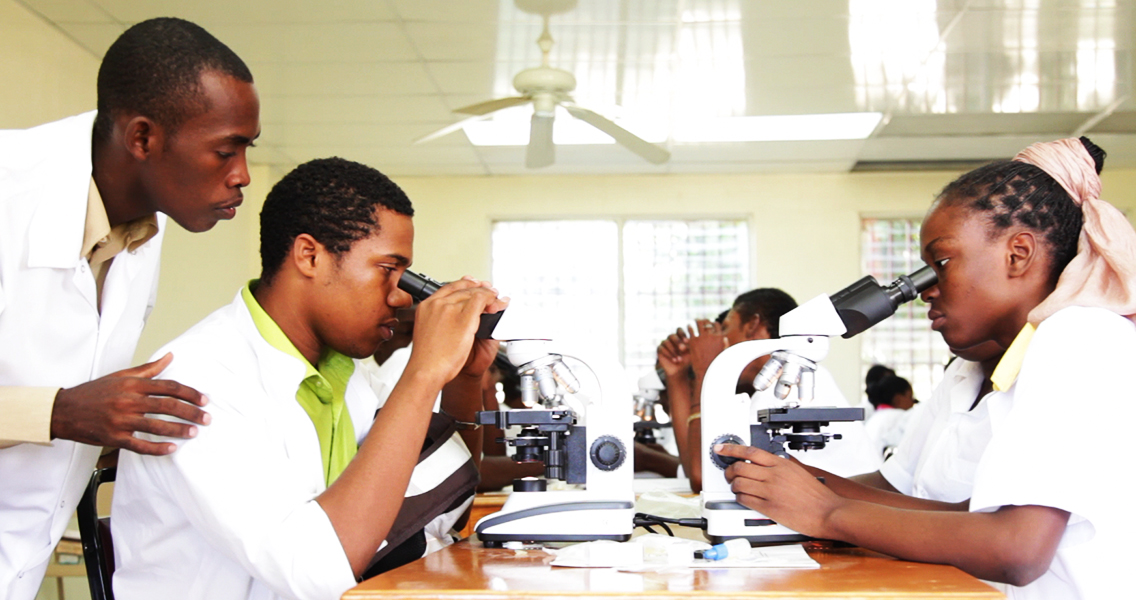
UNIFA Medical Students in the Laboratory
In the fall of 2014, UNIFA an accredited institution of higher education in Haiti, began its fourth academic year since its rebirth in 2011. The University was founded by former Haitian President Jean-Bertrand Aristide. When he returned to Haiti from forced exile in South Africa in the spring of 2011 he promised to dedicate himself to education in Haiti. Since then he has done just that, reopening UNIFA just six months after his return. There are now over 1000 students studying at the UNIFA campus in four degree granting programs: Medicine, Nursing, Law and Political Science, and a brand new program in Physical Therapy.
New School of Physical Therapy Opens
The new School of Physical Therapy, which opened on Oct 6, 2014, is the first Physical Therapy School in Haiti. (There are only a handful of Physical Therapists in Haiti and all were trained elsewhere.) This program is a partnership between UNIFA and Stony Brook University, State University of New York. This school answers the acute need for Physical Therapists in Haiti, a need that became particularly clear after the 2010 earthquake when many people suffered devastating injuries that require intensive rehabilitative treatment. Stony Brook faculty are working with UNIFA faculty to create the curriculum, and they will provide the much of the teaching staff for the courses particular to Physical Therapy.
Medical School Enrollment tops 500
At the Medical School there are now four classes years of medical students, for a total of over 500 young doctors pursuing their medical training at UNIFA. In January 2014, third-year medical students started clinical training at the University Hospital in Mirbalais run by Partners in Health and at the Bernard Mevs Clinic in Port-au-Prince. Third and fourth year students will continue their clinical training during the 2014-2015 academic year. Dr. Michaèle Amedé Gédéon was appointed as the new Dean of the School of Medicine in the spring of 2014. She is a former Minister of Health, and Director of the Red Cross. Since becoming Dean last spring she has brought tremendous skills, resources, energy, and enthusiasm to all of the health science programs at UNIFA.
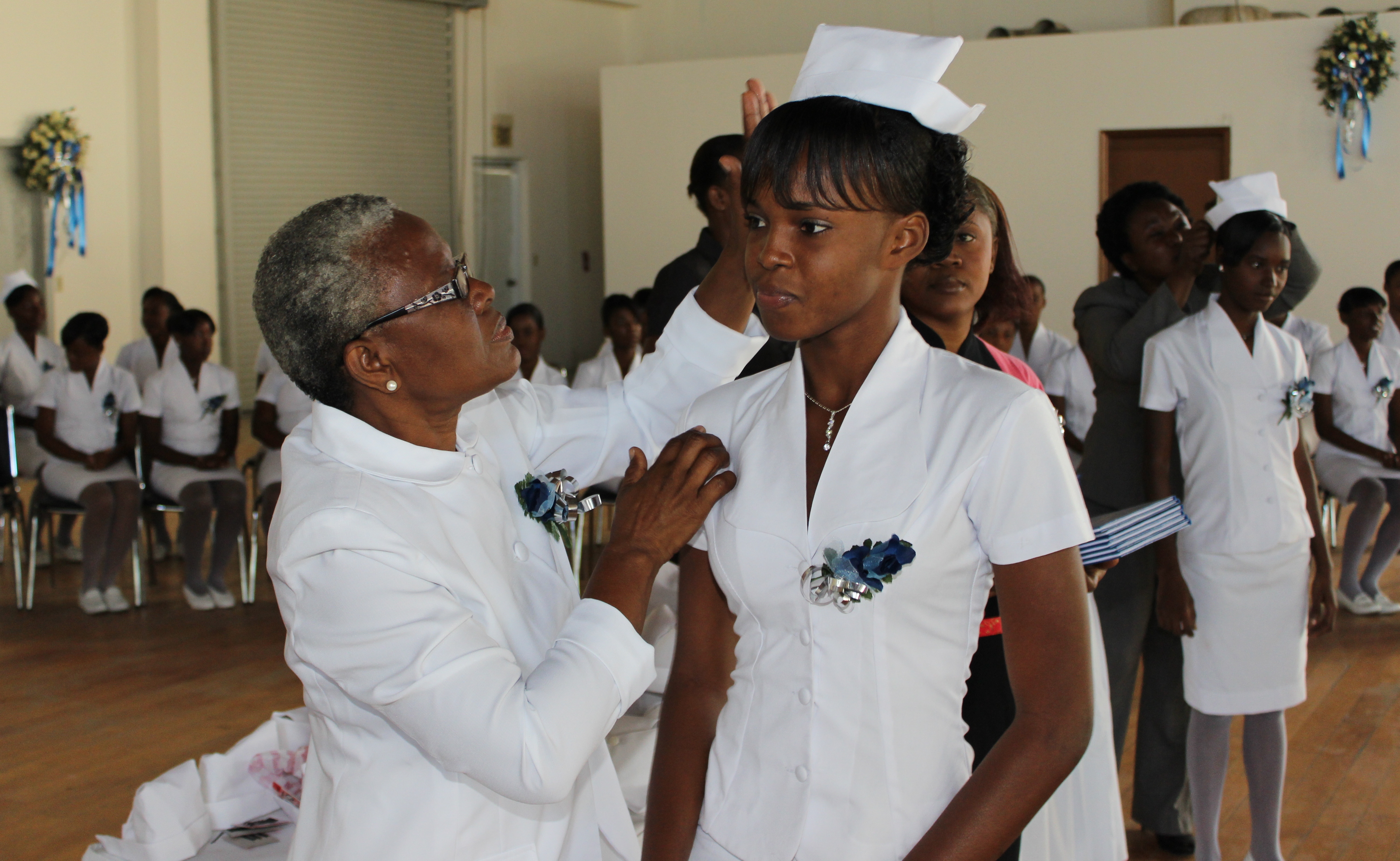
Capping Ceremony at UNIFA School of Nursing
Nursing School Will Meet High Demand for Nurses in Haiti
Berteline Beaulieu was appointed director of the School of Nursing in December 2013. She brings to the job over 25 years of experience in nursing, both as a practitioner and educator. Under her leadership second year nursing students completed a three week clinical rotation at Hopital St. Nicolas in the northern city of St. Marc, while nursing students will continue to gain valuable experiencing assisting physicians and nurses at the regularly scheduled health fairs at the Aristide Foundation for Democracy.
Law School Focuses on Human Rights and the Rule of Law
At the Law School, during its first year Jeffrey Brand, the former Dean of the University of San Francisco Law School, served as international visiting dean. In addition to support to the new school and helping to shape curriculum he led a two–week seminar with incoming students on international human rights law.
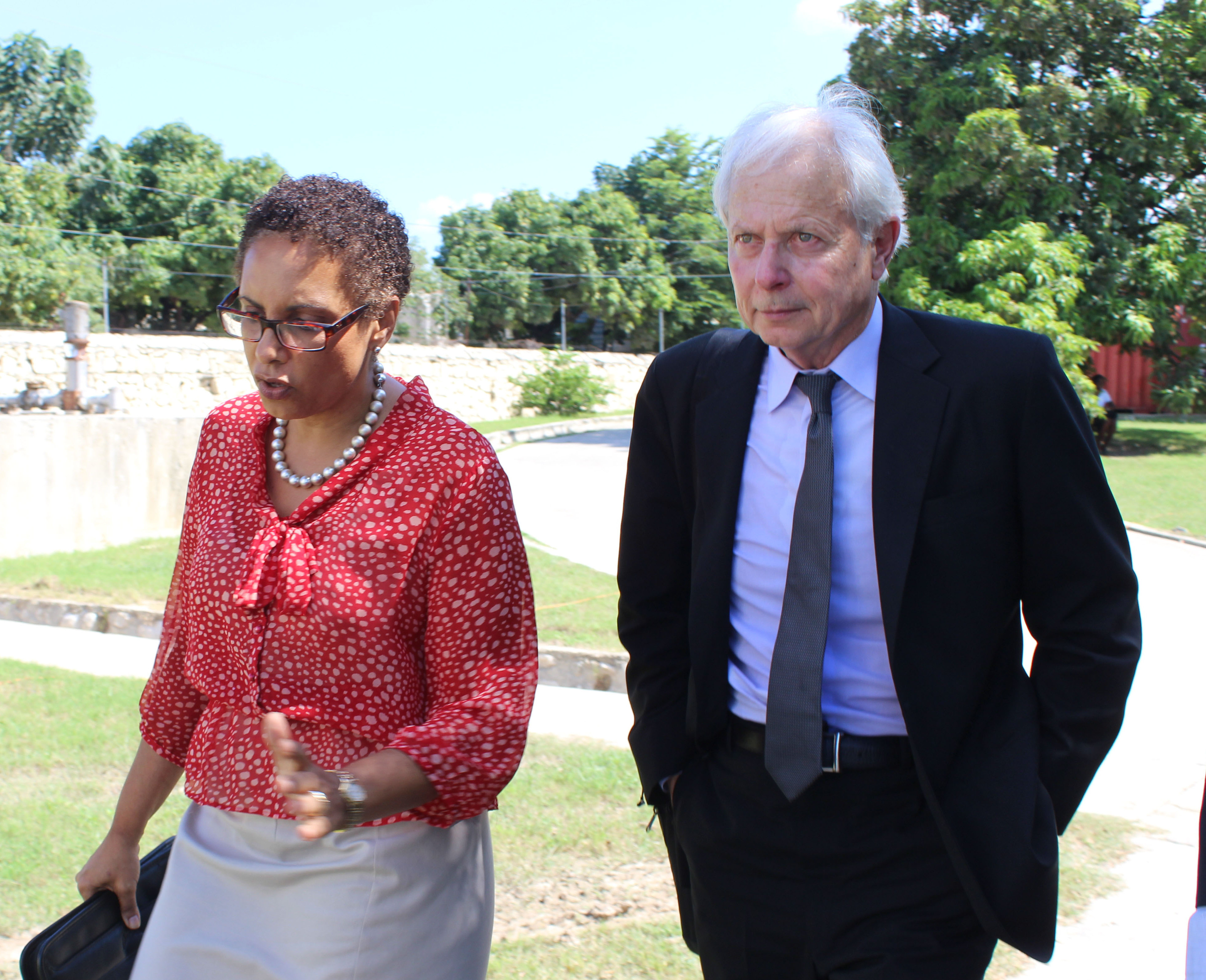
International Visiting Dean Jeffrey Brand with Mildred Aristide on the UNIFA campus November, 2013
Visiting Faculty & International Partnerships Connect UNIFA to the Universities Around the World
During the first 3 years, UNIFA welcomed over a 12 visiting professors from the United States, Haiti’s Diaspora Community and one professor of law from Southern Cross University in Australia. The partnership with Stony Brook University promises a steady presence of international faculty within the School of Physical Therapy. Physicians for Haiti, a medical group in Boston continues to recruit and send medical faculty to teach at UNIFA. In April 2014, Dr. James Quesada and Nadine Quesada spent a week at UNIFA. Jim specializes in medical anthropology at San Francisco State University and Nadine is a practicing registered nurse. They co-taught a five-day course (to medical and nursing students) on the physical and psychological effects of trauma. Dr. Diana Chamrad visited in May and lectured on health behaviors. Visiting faculty are scheduled to teach in all three of the health sciences program during the 2014-2025 academic year.
For a second year, Physicians for Haiti hosted a three-week summer course in social medicine at UNIFA. This year UNIFA nursing students join UNIFA and American medical students in this innovative, multidisciplinary class. Fifteen international students, and 10 Haitian students participated in the course.
In September 2014, UNIFA signed a Memorandum of Understanding with Rosalind Franklin University of Medicine and Science (RFUMS), based in Chicago. This partnership seeks to offer on line educational information to UNIFA and enhance UINFA’s information technology capabilities, to recruit other institutions of higher education into the collaborative effort, and involve RFUS faculty in the education of UNIFA and RFUMS students, and the delivery of charitable health-related humanitarian services in a clinical environment.
UNIFA is also collaborating with the diversity program, PRIDE, at NYU School of Medicine to develop a strategic vision for building a strong research division at UNIFA to address the many health and psycho-social problems facing Haiti.
Huge Demand and More Expansion
Demand for entrance at UNIFA continues to be overwhelming. For entrance into the three health sciences programs in the fall of 2014, one thousand three hundred candidates sat for the entrance exams. Before taking entrance exams students must first meet stringent high-school grade and test score requirements. Of the 1300 who met this mark and took UNIFA’s exams, approximately 350 were admitted to the school of medicine, the school of nursing, and the brand new school of physical therapy.
To welcome so many new students the UNIFA campus continues to expand. Over the summer of 2014, a second floor was added to the Nursing School and work began on a new building which will house the School of Physical Therapy. There are now three large building on the UNIFA campus, two if which will likely we further expanded in the near future.
Congratulations to the 350 new UNIFA students who began their studies in October, 2014. Congratulations to the faculty, staff and administrators who have made all this happen!
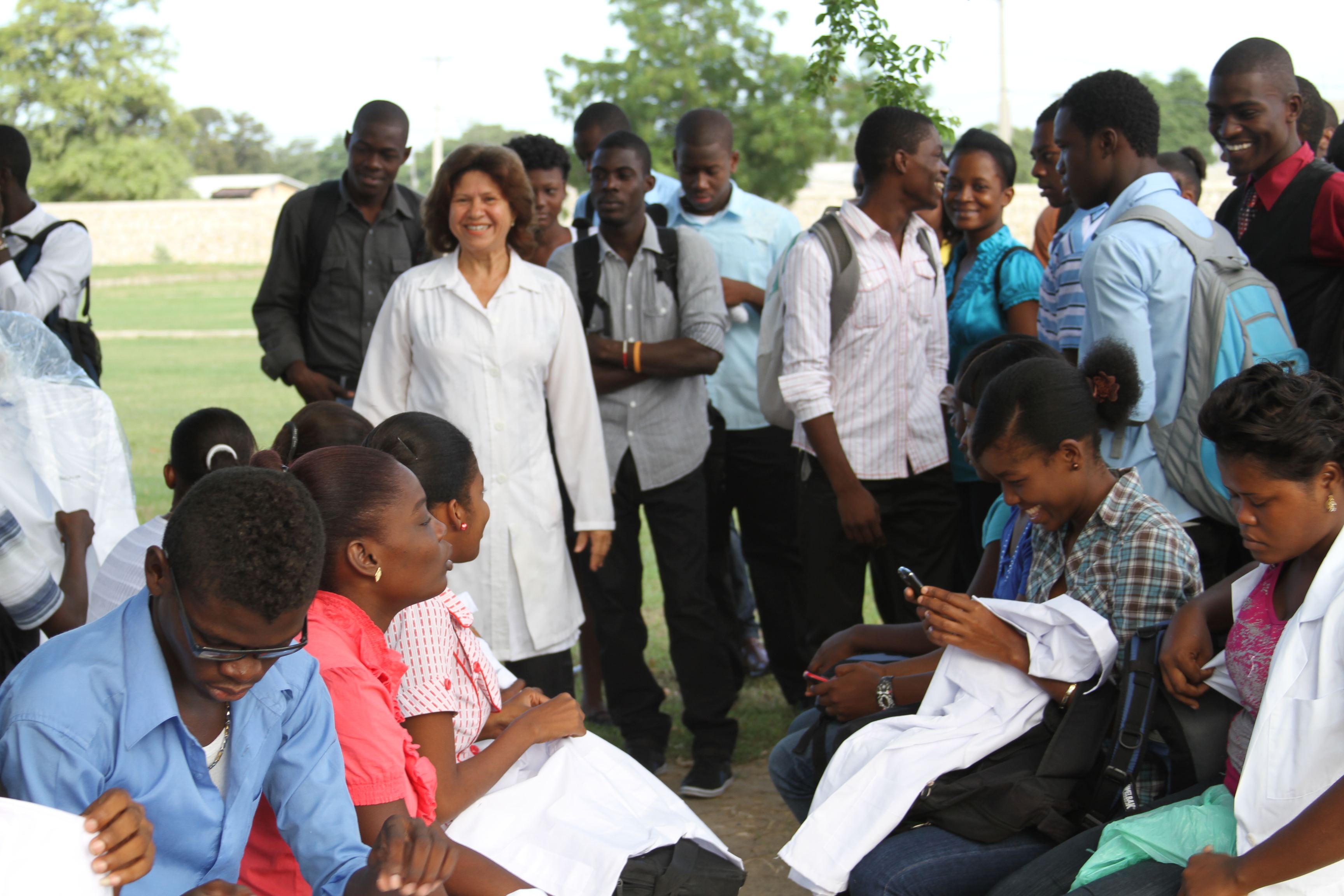
UNIFA Opens a School of Nursing in Its Second Year
On October 1, 2012, the Medical School at UNIFA began its second academic year. A new video highlights UNIFA’s progress and goals.
Two hundred and fifty-four candidates successfully passed the admissions exam and were accepted as first year medical students. One hundred and eighteen second year students returned to campus for their second year of studies (out of a total of 126 students who began in the fall of 2011). A dozen new teachers joined the teaching staff, raising the faculty’s total teaching staff to over 18.
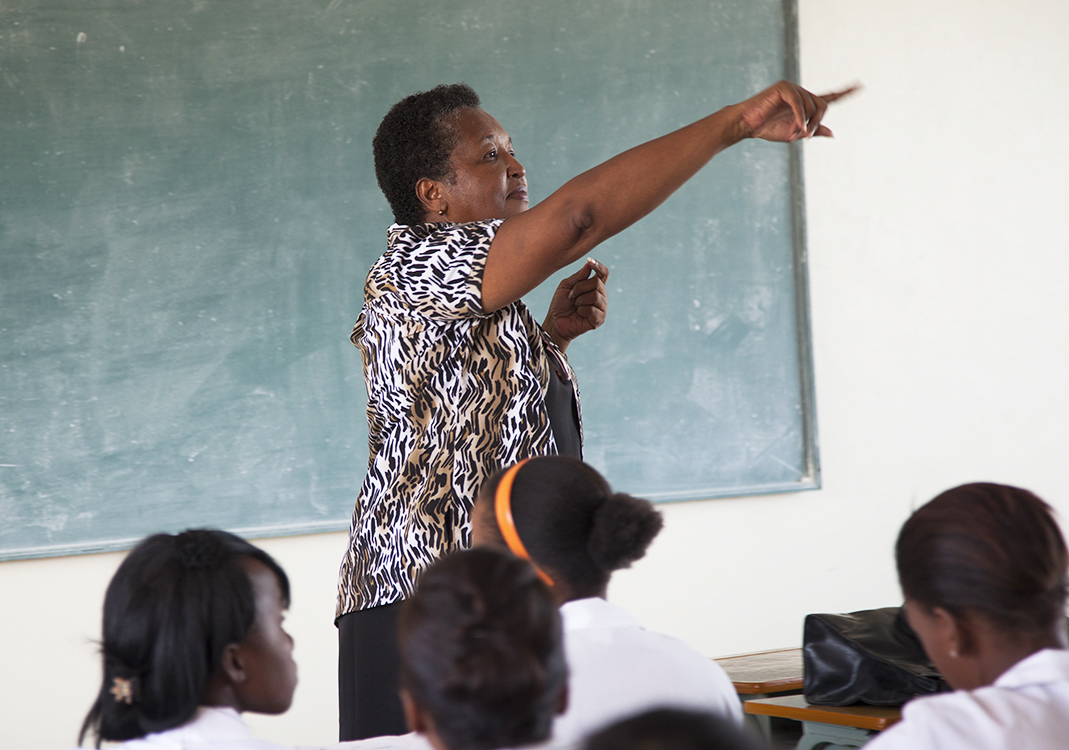
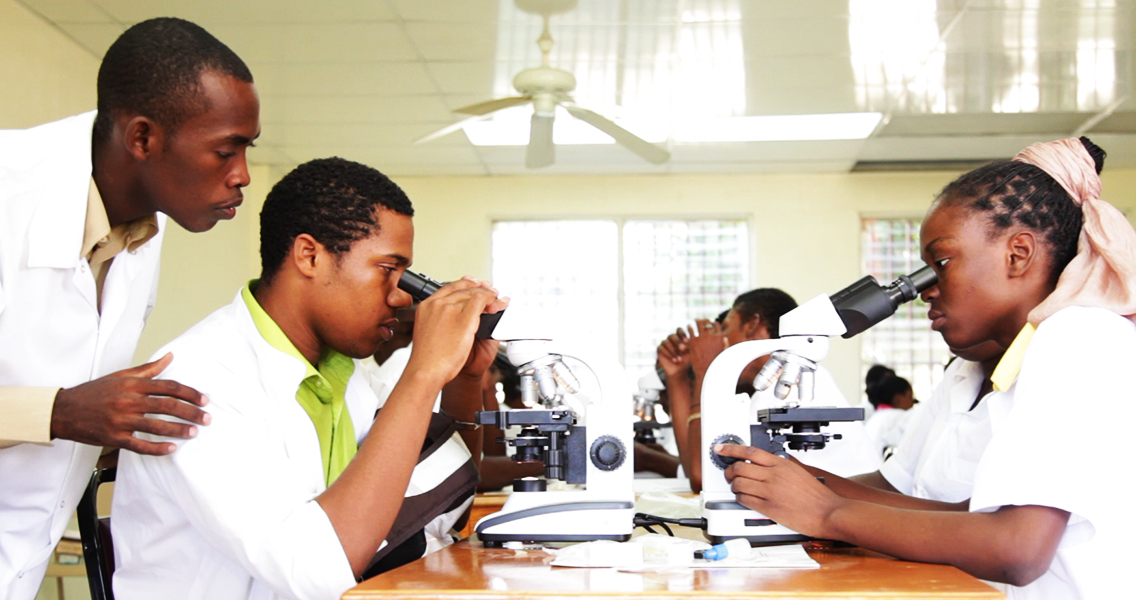
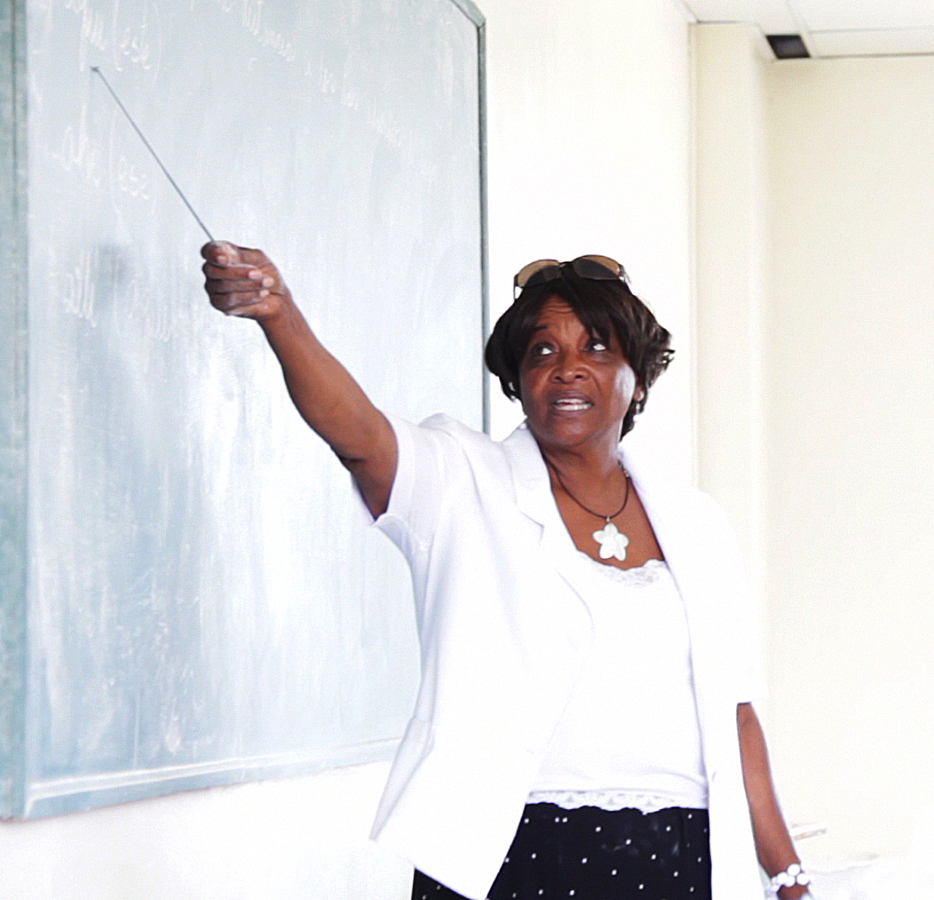
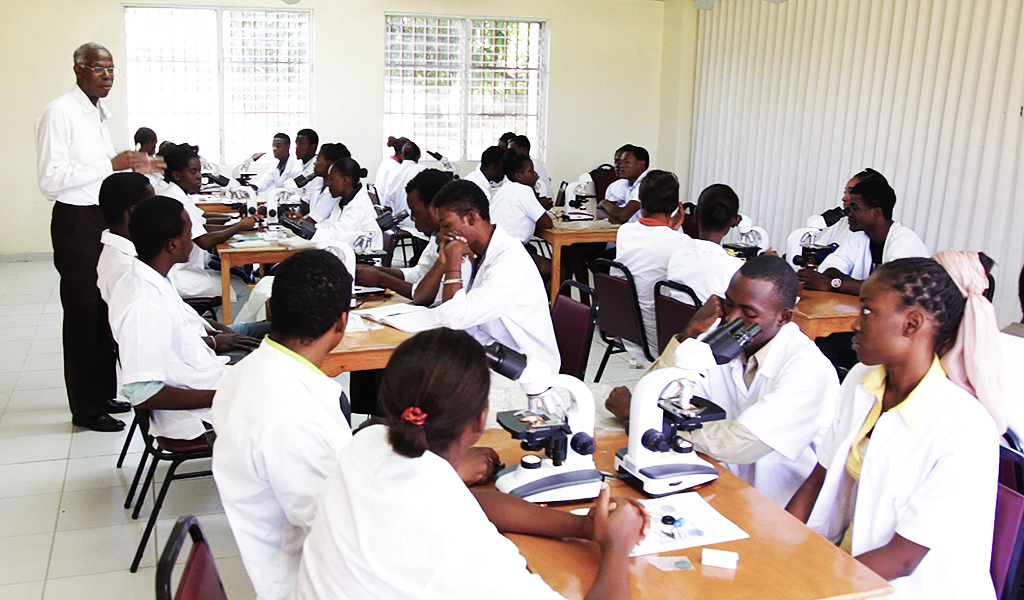
UNIFA offeres a full complement of science and medical coursework. Language study (French, English and Spanish) continue to be requirements.
UNIFA was able to offer all second year medical students a partial scholarship to assist with their tuition. A memo from the Office of the UNIFA President, Dr. Aristide, informed students that it was indeed the university’s goals to seek out scholarship aid for its students, as it announced this response to needs impatiently expressed by students.

UNIFA offered all second year medical students a partial scholarship. A memo from the Office of the UNIFA President, Dr. Aristide, informed students that it was indeed the university’s goals to seek out scholarship aid for its students, as it announced this response to needs impatiently expressed by students.
Thanks to generous fundraising efforts in the US sponsored by the Haiti Emergency Relief Fund and Partnership for Education, Health and Democracy in Haiti, significant improvements were able to be made on campus: the auditorium was renovated; electric and plumbing infrastructure in the classroom building was repaired; new student desks were purchased; benches and outdoor seating were installed under shaded trees in the courtyards around the Medical School.
SCHOOL OF NURSING
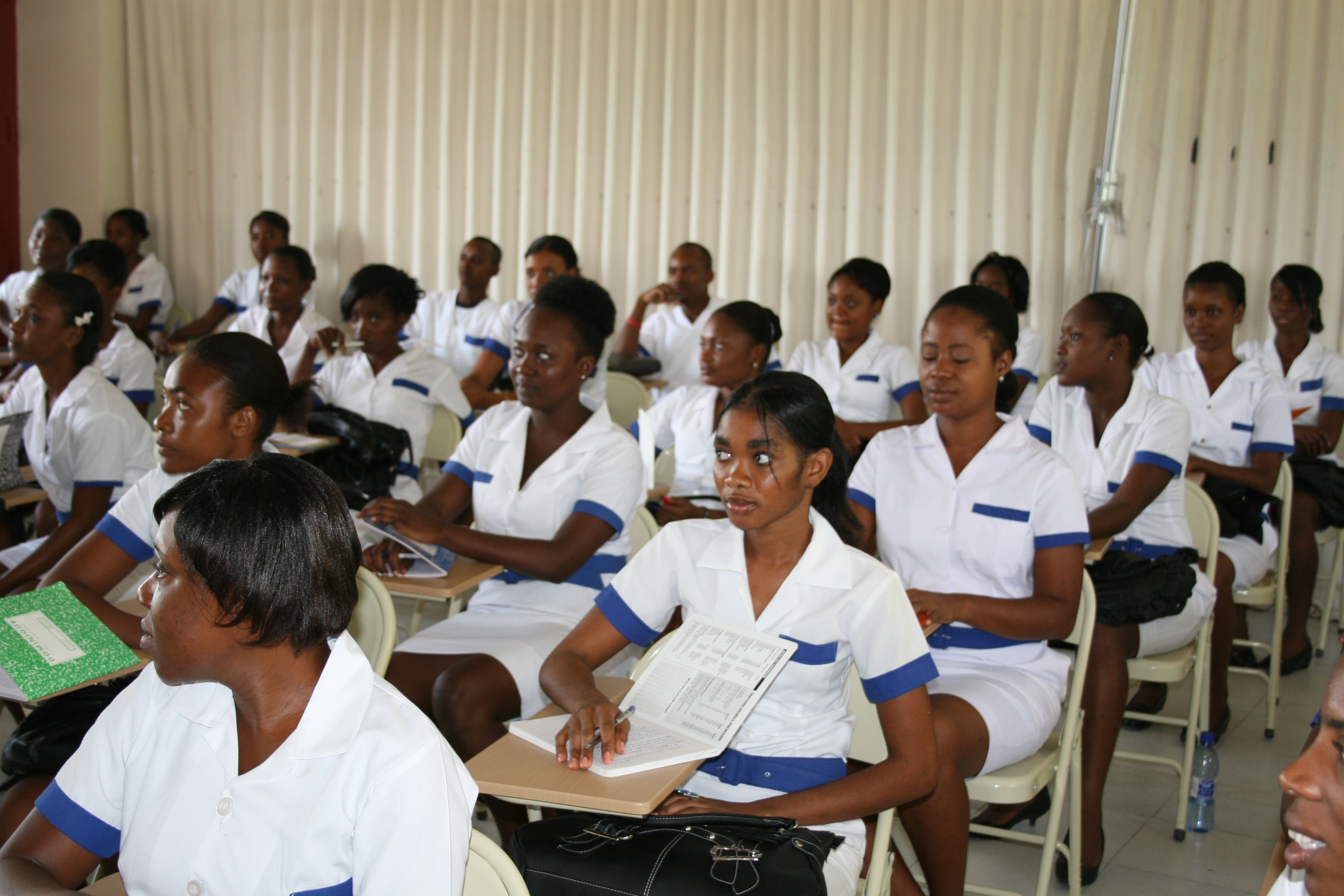 |
In early November 2012, the UNIFA launched its new nursing program. Haiti faces an acute nursing shortage, exaccerbated when hundred new graduates of the state’s nursing school were killed in the January 2010 earthquake. UNIFA’s nursing program aims to address this shortage. UNIFA admitted 73 first year nursing students to its program. These students will complete a 4- year nursing program. Five additional teachers joined UINFA’s teaching staff, while faculty from the medical school covers some core courses like chemistry and anatomy. A simulated nurse’s practice room is being set up on campus. In November, UNIFA held exploratory meetings with two US nursing schools to explore collaborative programs.
VISITING FACULTY
During the fall semester Dr. James Hudspeth, an instructor in Medicine at Boston University School of Medicine, conducted a week long seminar to the second year students focused on HIV/AIDS and tuberculosis. These two diseases are very common in Haiti, and are an important source of illness for doctors working in any aspect of medicine to know about. The students learned essential information about both diseases, including molecular biology, epidemiology, history, diagnosis, prevention, and therapy. This information will inform their subsequent 4 years of study and helps to frame a number of the other illnesses they will learn of in the years to come.
After classes, Dr. Hudspeth spent time with students, extending class discussions.
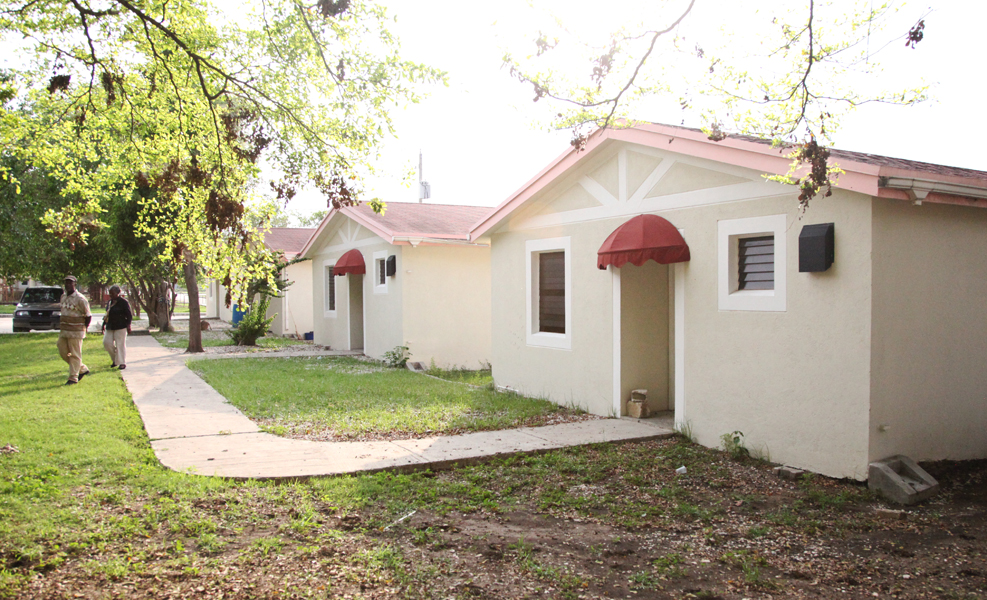
Professor residences at UNIFA
During the week, Dr. Hudspeth was housed on campus at one of the professor’s residences refurbished last year and set aside for visiting instructors. His visit is part of UNIFA’s partnership with the Boston-based health organization Physicians for Haiti. The group has a going a data bank of of physicians, nurses and instructors interested in teaching at UNIFA. Four more visiting faculty will offer courses in the Spring of 2013.
UNIFA MEDICAL SCHOOL REOPENS
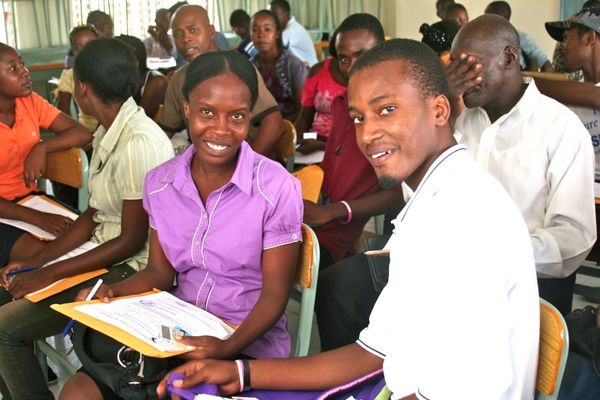
Medical Students Registering at UNIFA - Sept 2011
On September 26, 2011 the Medical School of UNIFA (the University of the Aristide Foundation) officially reopened its doors to a new class of future Haitian doctors. Seven years after the school’s forced closure in 2004, and four months after the return of former President Jean-Bertrand Aristide to Haiti, medical education resumed at UNIFA.
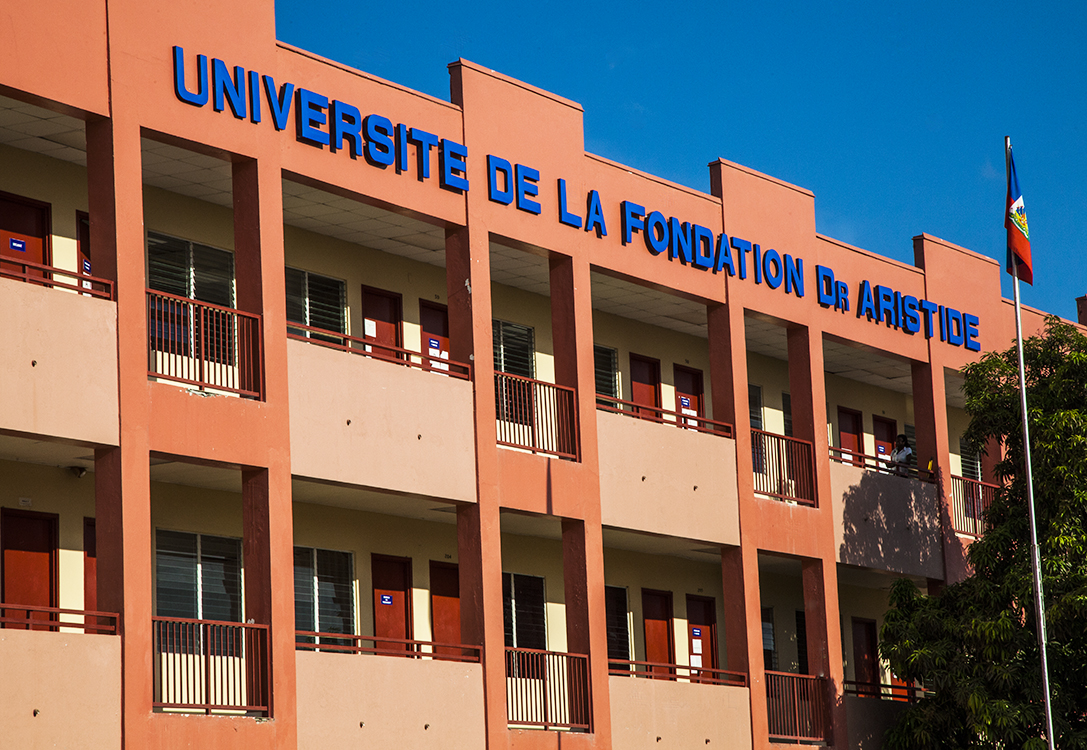
Over the summer of 2011, the Faculty of Medicine (pictured below) was repaired and refurbished after sustaining mild damage in the 2010 quake.
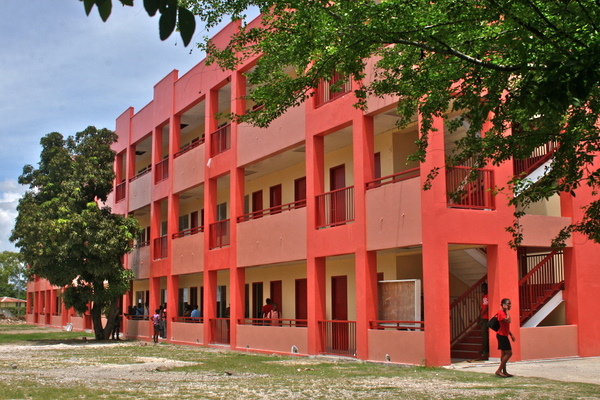
UNIFA MEDICAL SCHOOL
In late August, recruitment of students began. A week-long registration period brought thousands of young applicants to UNIFA and the Aristide Foundation where initial registration was held. Nine hundred students whose grades and scores on the Baccalaureate exam met the minimum requirement went on to take an entrance exam.
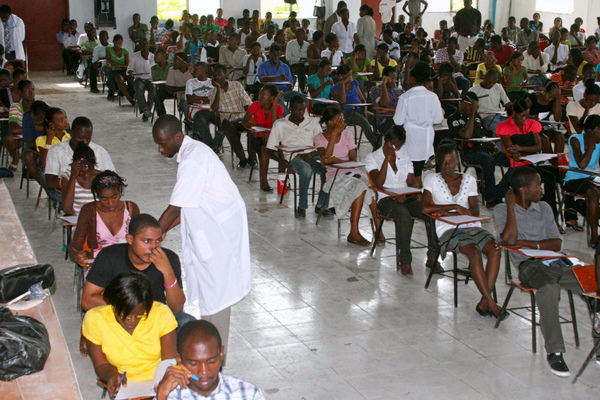
Sitting for the Medical School Exam
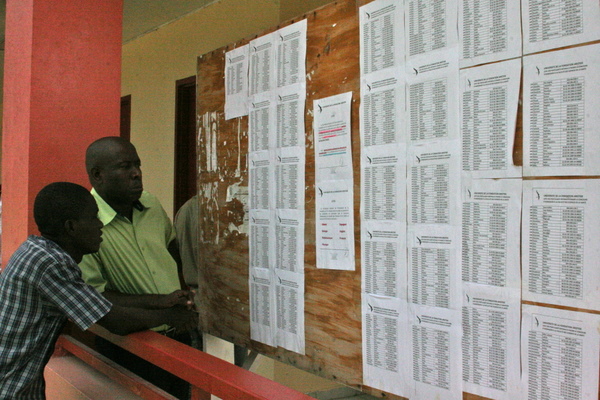
Exam Results Posted at UNIFA
From the 900 applicants, 126 students who received the highest test scores were selected.
UNIFA was founded in 2001 in response to the desperate need for more doctors and health professionals in Haiti. A fundamental part of its mission was and is to begin to break down long traditions of exclusion of the poor majority in Haiti from access to higher education. Even before the earthquake there were very few spots in medical schools in Haiti (private or public). Gaining entrance to Medical School was nearly impossible for students without connections or financial means. The earthquake destroyed or severely damaged 80% of the institutions of higher education, most are still struggling to resume full functioning. All of this made the reopening of UNIFA a priority. Today UNIFA still aims to combat social exclusion by recruiting students from families who have historically been unable to access higher education, from all ten departments of Haiti, and with a commitment to equal gender representation. Without financial support from the public sector, UNIFA can no longer offer Medical education free of charge. However tuition at UNIFA is just one-third of what private medical school in Haiti charge.
On September 26, 2011 Dr Ginette Lubin the new Dean of the Medical School welcomed the new students to the campus.
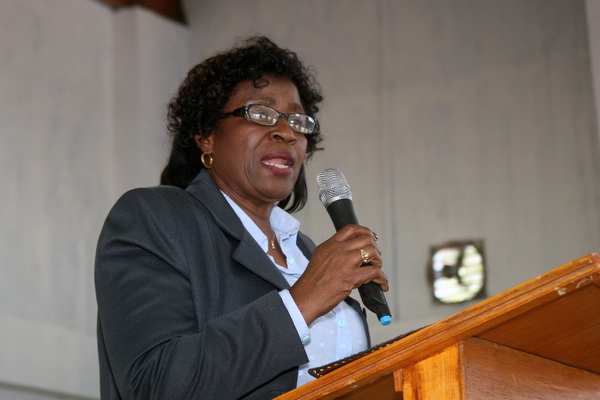
Dr. Ginette Lubin welcoming students to UNIFA Sept. 26, 2011

New medical students gathered the UNIFA auditorium September 26, 2011
Classes began the next day. This fall the students completed a 3-month intensive Spanish language program. As was the case before 2004, UNIFA’s medical curriculum is based on the curriculum used in Cuba, which has trained thousands of doctors from Latin America. UniFA’s faculty today consist of a mix of Haitian and Cuban medical and languages specialists. A select group of UniFA alumni, doctors from the original three classes of medical students who went on to complete their medical studies in Cuba after the 2004 coup d’etat, are assisting in the classrooms. The long term goal is that some of these young doctors will go on to get pedagogical training and eventually become faculty members at UNIFA.
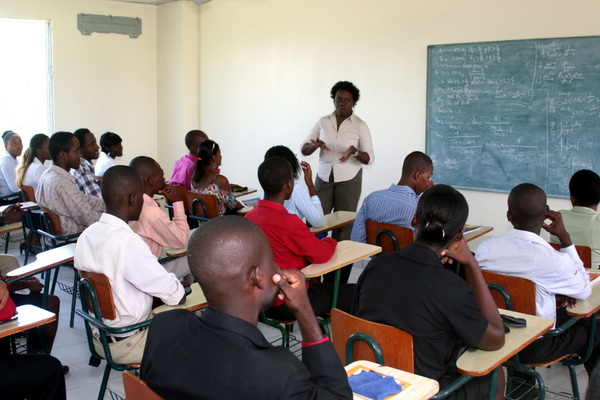
UNIFA Classroom
After completing the first phase of their language training the new class began the Medical portion of their studies in January 2012. They are expected to complete their studies in three to four years.
The reopening of UNIFA war financially possible due to two generous donations. We are deeply grateful to Dr. Paul Farmer and Partners in Health for their steadfast support. We are also grateful to the Haiti Emergency Relief Fund for the faith and dedication they have shown to the AFD and to UniFA.
We congratulate this first class of medical students for their success in gaining entry to UNIFA. We salute the sacrifices that they and their families are making to allow them to attend. We also salute the tremendous hard work of everyone involved, the staff and faculty of UNIFA, for coming together, rebuilding and reopening in such a short time.
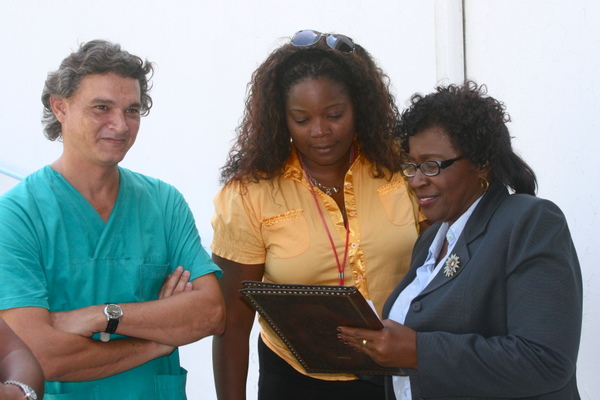
Dr. Ginette Lubin w/ UNIFA faculty members